
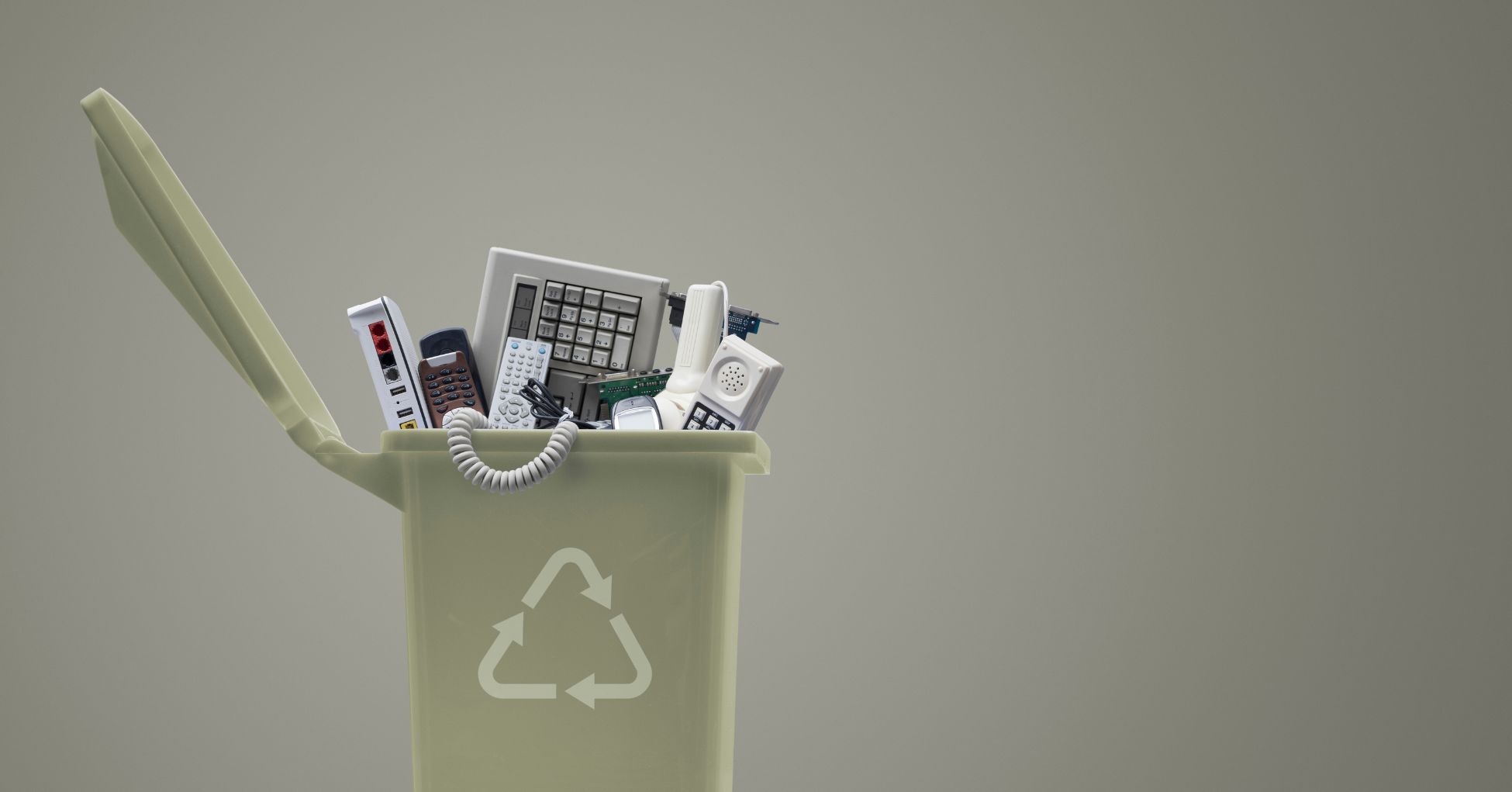
What Is E-Waste? A Complete Guide to Electronic Waste Management in Malaysia
You just replaced your office laptops. The old ones are stacked in the storeroom. Your colleague suggests calling a scrap dealer to take them away.Stop right there.What you have in that storeroom is not ordinary trash. It is e-waste and in Malaysia, e-waste is a legally regulated category of hazardous material that cannot be disposed of through normal waste channels. Getting this wrong can cost your company up to RM10 million in fines.In this guide, we explain exactly what e-waste is, why it is dangerous, how it is regulated in Malaysia, and what businesses and individuals need to do to handle it responsibly.What Is E-Waste? The Official Definition
E-waste, or electronic waste, refers to any broken, non-working, or obsolete electrical and electronic equipment that has reached the end of its useful life. This includes everything from smartphones and laptops to televisions, air conditioners, washing machines, and refrigerators.In Malaysia, the definition is more specific and legally significant. According to the Department of Environment (DOE) Malaysia, e-waste is categorised as Scheduled Waste under Code SW110, First Schedule of the Environmental Quality (Scheduled Wastes) Regulations 2005. Under this classification, SW110 covers waste from electrical and electronic assemblies containing components such as accumulators, mercury switches, cathode-ray tube glass, polychlorinated biphenyl capacitors, and materials contaminated with cadmium, mercury, lead, nickel, chromium, copper, lithium, or silver.In simple terms, this means e-waste is not ordinary rubbish. It is a category of hazardous waste that is subject to strict environmental regulations and mishandling it carries serious legal consequences for businesses.
What Counts as E-Waste in Malaysia?
E-waste covers a much wider range of items than most people realise. According to DOE Malaysia, e-waste is generally divided into two main categories based on its source industrial e-waste and household e-waste.For businesses, the most common types of e-waste generated include the following.| Category | Examples | SW110 Status |
| Computers & Laptops | Desktops, notebooks, workstations, servers, thin clients | Yes — must be disposed through licensed facility |
| Mobile Devices | Smartphones, tablets, smartwatches, company phones | Yes — includes batteries and accessories |
| Office Equipment | Printers, scanners, projectors, fax machines, UPS units | Yes — all powered equipment |
| Networking Equipment | Routers, switches, firewalls, access points, modems | Yes — industrial category |
| Data Storage | Hard drives (HDD), SSDs, USB drives, backup tapes | Yes — data must be destroyed before disposal |
| Household Appliances | Air conditioners, washing machines, refrigerators, televisions | Yes — major appliance category |

Why Is E-Waste Dangerous?
This is the question most people ask and the answer explains why the regulations exist in the first place.Electronic equipment contains a range of toxic and hazardous substances that pose serious risks to human health and the environment when not disposed of properly. According to DOE Malaysia, components in e-waste contain toxic materials including mercury, lead, cadmium, arsenic, bromine, and beryllium. When e-waste is dumped in landfills, burned, or handed to informal recyclers, these substances leach into the soil and contaminate water sources threatening aquatic life and human health in surrounding communities.The scale of the problem is significant. Malaysia is estimated to generate 24.5 million units of e-waste in 2025, according to DOE Malaysia. Globally, the picture is even more striking the Global E-Waste Monitor 2024 reported that the world generated 62 million tonnes of e-waste in 2022, with only 22.3 percent recycled safely. The remaining 77.7 percent ended up in landfills, was burned, or was handled by informal sectors without proper controls.However, the story is not entirely negative. E-waste also contains valuable materials DOE Malaysia confirms that components in e-waste include gold, copper, palladium, and silver, all of which have significant recycling value. This is why responsible e-waste management is increasingly viewed not just as a regulatory obligation, but as an economic opportunity for businesses that approach it strategically through asset remarketing and refurbishment programmes.E-Waste Regulations in Malaysia — What Businesses Need to Know
Understanding the regulatory framework is essential for any business that generates e-waste which, in practice, means virtually every company in Malaysia that uses computers or electronic equipment.Under the Environmental Quality (Scheduled Wastes) Regulations 2005, companies that generate e-waste are legally required to register with DOE as a scheduled waste generator, store e-waste in properly labelled containers that meet DOE standards, use only DOE-licensed transporters and facilities for disposal, and report all waste movements through the eSWIS (Electronic Scheduled Waste Information System) portal.The consequences of non-compliance are severe. The Environmental Quality (Amendment) Act 2024, which came into force in July 2024, increased the maximum penalty for illegal disposal to RM10 million and imprisonment of up to five years. Crucially, company directors can be held personally liable even if they were unaware of the specific disposal that took place.This means the responsibility for proper e-waste disposal rests firmly with the company that generated the waste not with the vendor or contractor who collected it. Choosing an unlicensed vendor, even with good intentions, does not protect your company from liability.